
Growing up, heading south always meant going somewhere warmer but in the Southern Hemisphere, it usually means the weather will be cooler. That was certainly the case when we left Iguazu Falls and headed down to Buenos Aires where the temperature was -1 C when we arrived. I was so thankful for the wool shawl (which Rob kept calling a poncho) I acquired at Amber’s wedding! I wore it everyday when we were in Buenos Aires, usually over two sweaters (or jumpers as Aussies would say) and with my jacket and scarf added on top.

We spent our first full day in Buenos Aires doing a private city tour with another friendly and informative guide. We started in the city square which was surrounded with beautiful historical buildings. We both loved the corner buildings most, maybe because they reminded us of the architecture in Paris. The corner building in the middle picture below used to be used for short-term accommodation for newly arrived immigrants to provide them a chance to find their feet and organise a place to live. The accommodation was only for three days but I still thought it was an incredibly progressive and generous initiative; unfortunately they don’t do it anymore.


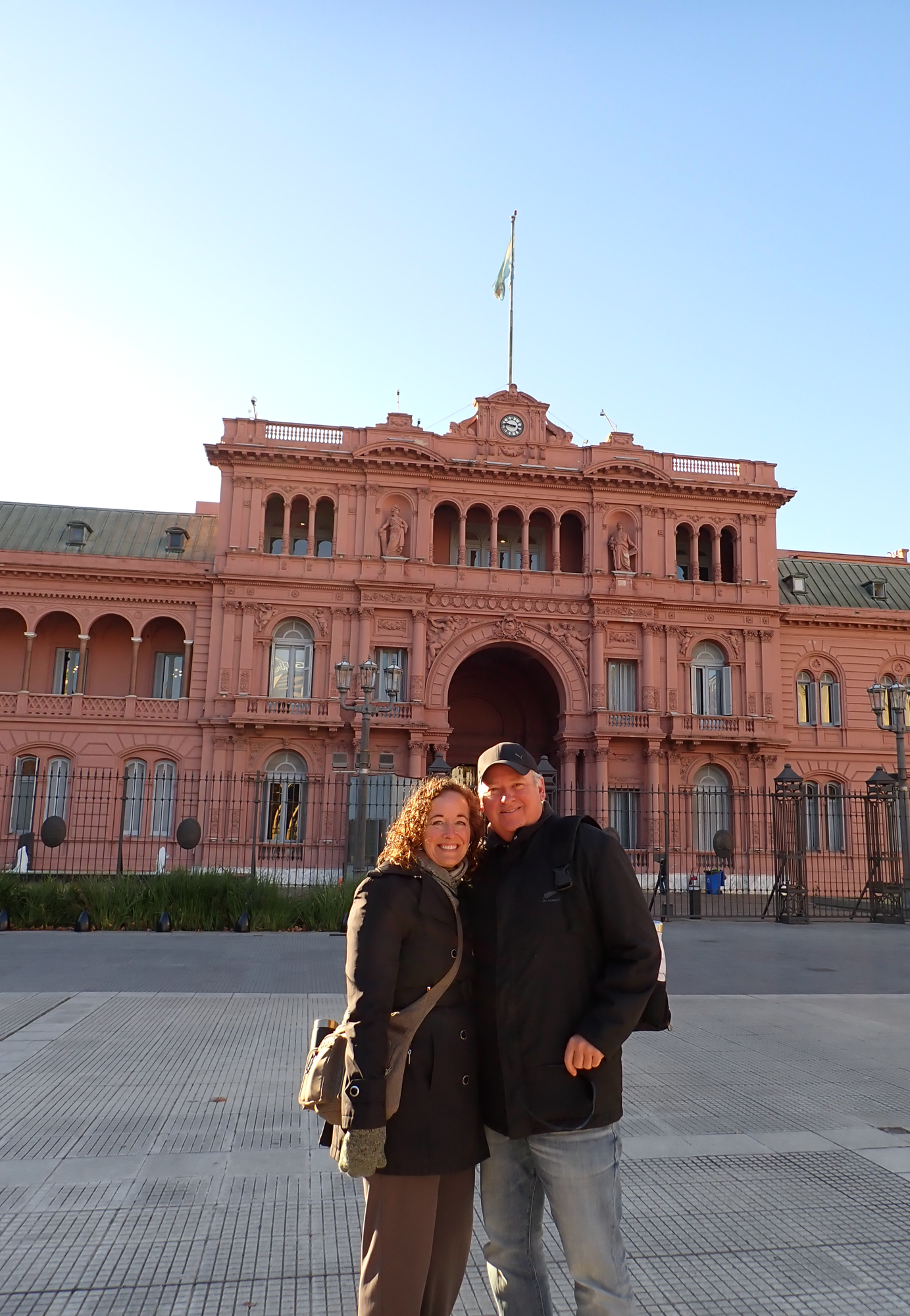
Another main building in the city square is government house, where the president works. It is formally called Casa Rosado, and informally called the ‘Pink House’. The pink house name seems obvious given the colour of the building, but the story behind the colour was fascinating. Sophia, our guide, said that the palace was initially painted in the 1800s and the artist who painted it used the blood and fat of cows to create the pink colour. Apparently, it was thought the blood would ward off damage from the humidity. Argentina is known to have more cows than people so I am not sure if this is true or just folklore as a way of promoting their beef industry, but it was still a ‘fun fact’. We also had the opportunity to see the Changing of the Guard which happens every two hours throughout the day.


Out front of the Pink House was a monument for General Manuel Belgrano who designed the flag of Argentina. The statue was nice enough but what drew us to it were the rocks that filled the area. Each of the rocks included a name and date, and each represented a person who had died during COVID-19.


Also in the city square was the Metropolitan Cathedral. Pope Francis preached at the Metropolitan whilst he was archbishop before coming the Pope in 2013. The building looked absolutely nothing like a cathedral or a church. For some reason, we didn’t think to take a picture of the front, but we did take a few pictures inside. It was stunning! It was absolutely massive with intricate tiling on the floors, and gold lined trim and ceilings. The amount of gold and expensive materials in all of the churches we went into confounded me a bit. I have of course seen similar displays in churches in Europe but just hadn’t thought that deeply about it before now. I suspect it reflects the central focus of religion in life and culture at that time but given what I know about how desperate people were for life’s basics, it just feels unnecessarily extravagant.


After leaving the city square, we headed to a neighbourhood in Argentina called La Boca, home of the Boca Juniors football team. Apparently, football fans are so intense here that the stadium only allows Boca Junior fans to attend the games as a way to avoid clashes. I suppose covert fans of other teams could sneak in provided they weren’t wearing their own team’s colours, but I suspect they would know how outnumbered they were and refrain from cheering for their own team. The majority of buildings along the main street were painted in the team colours of blue and yellow. There were also many other multi-colour buildings that included animated statues of famous football players or Argentinian icons. La Boca also had its own version of the Hollywood Walk of Fame, but instead of famous actors, most of stars were dedicated to football players and team managers.


La Boca also included a small street filled with brightly coloured tenement houses. These houses were originally built by immigrants using whatever materials they had on hand so the houses were grey and dark. A local artist had the idea to use leftover paint from the port, which was just down the street, to try and make the area look happier. As a result of using whatever paint was available, sections of the houses were painted all different colours. I suspect they have been repainted many times since but they have maintained the bright, colourful feel of them.

We also stopped by another area of the city called San Telmo which included a section of small shops and galleries. All of the walkways were covered with floating umbrellas which looked super pretty. While most were multi-coloured, there was one small alley way that included umbrellas in the colours of the Argentinian flag.


Our last stop of the tour was the Mercado market which was also located in the San Telmo area. It had these massive high ceilings and all kinds of interesting shops and food stalls. It was initially built in the late 1800s to provide a central, covered space for the locals (mostly immigrants) to trade and buy fruit and vegetables. It has now grown to include restaurants, bars, wine stores, and shops. It even had a wine window where you ring the bell and they hand you out a glass of wine. We ended up having a late lunch here and after much debate, chose to give Choripans a try. They are a grilled sausage that comes with different toppings and while it sounds pretty average, they were absolutely amazing!


That night, we went out to a dinner tango show at La Ventana. The restaurant was super cool and filled with all kinds of memorabilia and old images. The food was excellent and so was the wine! The dinner included one bottle per couple as part of the meal. By the end of the night, it felt much like a wedding reception with all the unfinished bottles from tables where people left early being used to fill our glasses continuously! Freddy, our waiter, took great care of us.


And of course, the show was spectacular. It included a number of different tango numbers, but also a range of musical numbers that showcased the different elements of Argentina’s culture and language. The show far exceeded our expectations. Here’s a short clip.
The next day we were off to Uruguay (a little shaky and cursing that Freddy!) which was only about an hour and fifteen minutes away on the ferry. Before getting on the ferry, we had to go through Argentinian customs to be permitted to leave Argentina, and then Uruguayan customs to gain entry to their country. The funniest thing was that the booths were side-by-side, and actually connected to one another. One more stamp in our passports – yay!

The ferry brought us to a little town called Colonia del Sacramento, which is one of the oldest towns in the country. In fact, its historic quarter is a UNESCO World Heritage Site. We started the day with a visit to a local winery. The wine and lunch were quite nice, but the tour was pretty underwhelming overall. The grounds were pretty though. Rob was convinced this sign meant no pissing on the grass which he found quite entertaining.


We then headed in to town to explore. The buildings and their architecture were so interesting and in many ways, quaint. The roads were all cobblestone, but very rough cobblestone. Many of them were actually quite treacherous and we were surprised to see people driving and cycling on them.


We saw a number of old cars along many streets in town with all kinds of plants growing in and around them. I loved that they turned them into gardens instead of getting rid of them. The town was also filled with interesting sculptures and little touches which just added to the quaintness of it all.


Colonia is situated on a bit of a peninsula so is surrounded by water. I reckon it is a gorgeous spot to wander through and just relax by the shoreline in summer. Unfortunately, many of the shops and areas were closed while we were there, likely due to limited number of visitors that come across in winter. Despite the cold weather, we still decided to enjoy some wine on an outdoor patio in the sun next to the Pesca Cololnia Yacht Club. We were the only ones on the patio and the staff thought we were crazy!


We retuned that evening to Buenos Aires on the ferry and found an Italian restaurant near the ferry port for dinner. It was surprising the number of Italian restaurants we stumbled upon during our South American trip. We are certainly not complaining, but maybe just a bit envious since it’s the one cuisine that we lack in Central Queensland.
After one more sleep in Buenos Aires, it was time to say goodbye to Argentina and head off to our final destination – Chile. I’ll post the last of our Long Way Down adventure soon!