
After a wonderful time with family in friends in Canada, it was time to start our adventures in South America, starting with an overnight flight to Lima, Peru. We landed early morning and dropped our bags at the hotel, and then ventured off to explore Miraflores, a district of Lima. One of the first things we stumbled across was the tennis facility which was hosting a masters tournament of some sort. It ran right through the centre of the city and seemed to go on forever. Right at the edge of the facility, we even spotted one Pickleball court. I guess Pickleball hasn’t quite caught on there yet.


It was pretty chilly the day we spent in Miaflores but that didn’t seem to keep the surfers away. There were surf ‘schools’ all along the waterfront and we were surprised by the number of people in the water. Given how limited surfing is in our calm waters in Yeppoon, it was fun to watch. We had hoped to be able to watch while enjoying a coffee or something in this amazing looking restaurant but we were there a few hours too early.


After watching the surfers for a bit, we hiked back up the cliffs and wandered through Love Park. The park features this massive sculpture called El Beso which is surrounded by gorgeous mosaic walls. It was a really pretty spot and I imagine would be even more so when the sun is shining and reflecting off all of the tiles.


Miraflores is also home to Kennedy Park, which is named after John F. Kennedy. We never did figure out how or why that came to be. It seemed pretty random to us. The park is incredibly well maintained with workers absolutely everywhere. One of the most interesting thing about Kennedy Park was the cats. Everywhere you looked, you could see cats popping their heads up between the flowers. We even spotted one sleeping on the statue at the front of the large church at the entrance to the park. The park is quite large and at night there are food vendors and even street artists and entertainers throughout. It was a great spot!


After dinner and night’s sleep, we set off the next day for Cusco. The flight, which was only about an hour and a half, gave us our first view of the Andes. When we landed, we were greeted by the first of the many friendly drivers and tour guides we would have in Peru. It was also the start of our tour guides encouraging us to pose for photos. I think we ended up with more photos of the two of us on this trip than we’ve had across the last decade!


After dropping our bags at the hotel, we headed off on a tour of the city. The city centre of Cusco is quite impressive


This day tour was also our first experience exploring some of the ancient Incan ruins in the area starting with Puka Pukara, a military fort. Puka Pukara is unique to other ruins in the haphazard way rocks seem to fit together.


We then carried on to Saqsaywaman. This set of ruins is located at the top of a steep hill so it was a bit of a hike up. The altitude certainly made the hill climb a bit trickier. I had been struggling with a bit of dizziness much of the day from the altitude so the extra exertion of the hiking was a bit tough but the views were worth it. Prior to heading to Cusco, I hadn’t even really considered the fact we would be at the edge of the Andes and at a high altitude. I’ve experienced altitude before, but never this high. Cusco’s elevation is 3399 metres (11152 feet) so it took some getting used to both for walking and sleeping.


Following a full day of walking, we were more than ready for a drink and yummy Peruvian food. As we re-entered the town centre, we saw the start of the Mobil car rally, a 3-day race that starts from Cusco’s central square. We were able to watch the festivities from the second floor restaurant were in.


The next day we headed out to the Sacred Valley on the Urubamba River to the town of Pisaq and then Ollantaytambo. Pisaq sits at the bottom of the valley next to the river but is surrounded by these fascinating ruins in the hills.


The Pisaq ruins were really interesting and highlighted the innovative thinking of the Inca. The terraces you see below were built to support farming and supported water flowing from one level to the next, which ensured proper watering of the crops. I think they said there were more than 700 of them altogether. The Inca then put their homes at the top of those terraces ensuring they wouldn’t be flooded. It’s hard to see but next to the village at the top of the hill are about 3000 tombs (they look like caves). Theses tombs were apparently initially filled with gold and silver but that all disappeared when Spanish invaded. The ruins themselves were impressive but the views of the valley and surrounding hills were breathtaking.


After a bit of lunch, we carried on to Ollantaytambo. As most of you know, Rob has become the master organiser of our vacations and I generally have little to no knowledge of what’s been planned. Had Rob told me we were going to be spending full days looking at archaeological ruins, I probably would have groaned a bit and expected to be bored pretty quickly. That wasn’t the case at all. Each place we went was unique and every bit as fascinating as the last. Ollantaytambo was built for an Inca Emperor and was most impressive by the sheer size of the rocks that made up its structures. At the very top was a set of six massive rocks which was the start of a temple which the Inca built in such a way to specifically capture the solstice. Each stone was about 12 feet high and weighs 50 tons. It is just so hard to fathom how the people were able to move and piece them together without the help of modern equipment. The other interesting part is that they pieced the stones together without mortar.


After a full day of touring ruins, we caught the train from Ollantaytambo to Machu Picchu. It was such a cool experience. The ride was just under 2 hours with the most gorgeous views of the mountains. the train had windows at the top so you could see the view from all the way around you.


The town of Machu Picchu was fantastic and we were a bit disappointed that we’d only planned to stay there one night. The town has no car traffic and has many stone carvings throughout. We really loved the feel of the place.


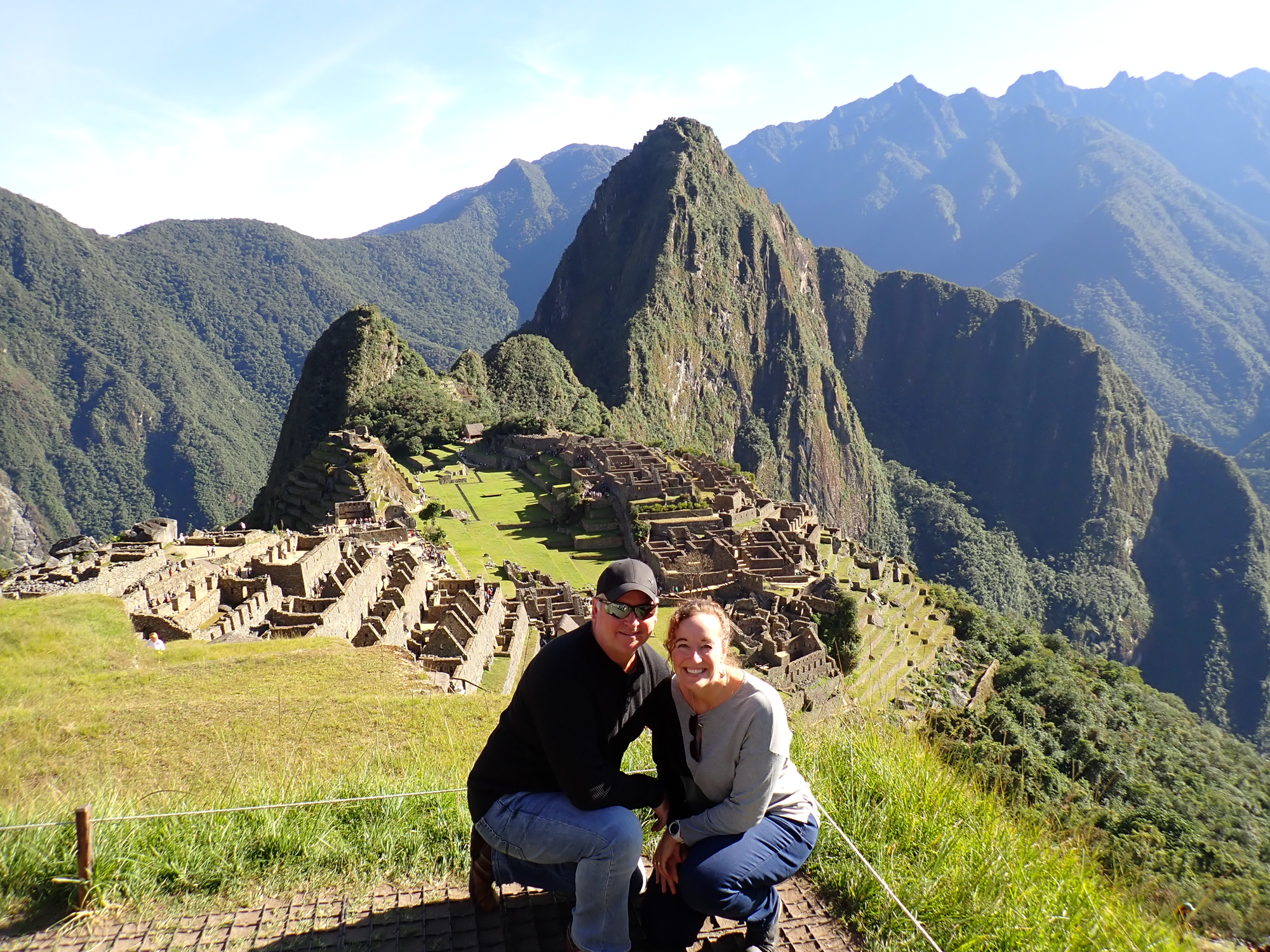
The next morning we headed off to see Machu Picchu. After being so amazed by the ruins we had seen, particularly Pisaq, I was worried I might feel a bit let down by Machu Picchu but that wasn’t the case at all. It was absolutely spectacular! We had sunshine and perfectly clear views as well, something that is quite rare there. Rob had organised a private tour and Christian, our guide, was also taking it all in because he said he doesn’t often get to see it so clearly.

Machu Picchu is suspected to have been a city built specifically for Inca royalty and dates back to the 15th century. The city was abandoned during the Spanish invasion in the 16th century and then rediscovered in the very early 1900s. They say that the Inca destroyed the Inca trails that lead to Machu Picchu before abandoning it which is why it took so long to be discovered. Now that I’ve seen where it’s situated, it is hard to believe it was ever found at all!


While I know the draw of Machu Picchu is the ruins themselves, I couldn’t get enough of the mountains and views that surround it. The whole area felt magical and I felt fully connected to nature there.


After an incredible day, we travelled back to Cusco for one more day of exploring. We started the day at Chincherro where we visited a ‘family’ to learn more about how they clean, dye, and weave alpaca wool. Alpaca products were a huge commodity in Peru so it was interesting to see the traditional way in which they process the wool. While we found Peru to be the least commercialised and Westernised of the different places we visited, I am sure that the bulk of the wool is processed using much more modern methods. Visits like this are used more to encourage tourists to buy their wares, but it was still a fun little experience.


We then headed to Moray, another archaeological site. This one was distinct in its circular use of terraces and made me think a little of crop circles. The pictures don’t really show just how big these circular terraces were or how deep – the largest is 30 metres deep. The design and depth of these terraces results in a greenhouse like effect with much warmer temperatures at the bottom. The Inca apparently used different soils to grow different crops across the different terrace and temperature levels. I was continually fascinated by their intelligence and innovation!


We then went to see the Maras Salt Mines which are owned and operated by the people living in that community. I never imagined it to be as interesting or as pretty as it was. Essentially, it’s a series of pools around which are narrow channels where the water runs. Once a pool is full, they block channel of water that leads to that pool, usually with rocks or small pieces of wood, and then wait for the water to evaporate. Once the water evaporates, the people scrape the pool, in layers, to mine the salt.


It was then time to travel back to Cusco, our last night in the city. Completely by accident, we had managed to plan our trip during the Cusco Solstice Festival, a celebration of the Inca New Year. It’s also called the Festival of the Sun. The festival lasts five days and includes full day parades with cultural dress, music, and dancing. The parades went from noon to midnight! It was wild! Here’s a little video. The colourful flag is Cusco’s flag.
The next morning, we travelled back to Lima. We had booked an overnight flight to Brazil so Rob organised a private tour of the city to fill the day. We absolutely loved Lima! It is not talked about much when you look up information about travelling to Peru which is why Rob didn’t organise for us to stay there a day or two. If we ever go back to Peru, we would certainly plan to spend some time there.


At the bottom of this street where the tunnel is, is the start of beautiful street art. It was everywhere and some really cool stuff.


The town centre was also gorgeous. The streets around the centre were so quaint and many of the buildings has flowers and vines growing up them. The wood balconies were designed so women could see out and view the city, but people in the square couldn’t see them. The architecture was stunning.


After a fabulous six days (wow, we really packed it in!!), it was time to say goodbye to Lima and head off to Brazil for a completely different type of experience and adventure (and much less busy!). Stay tuned…
